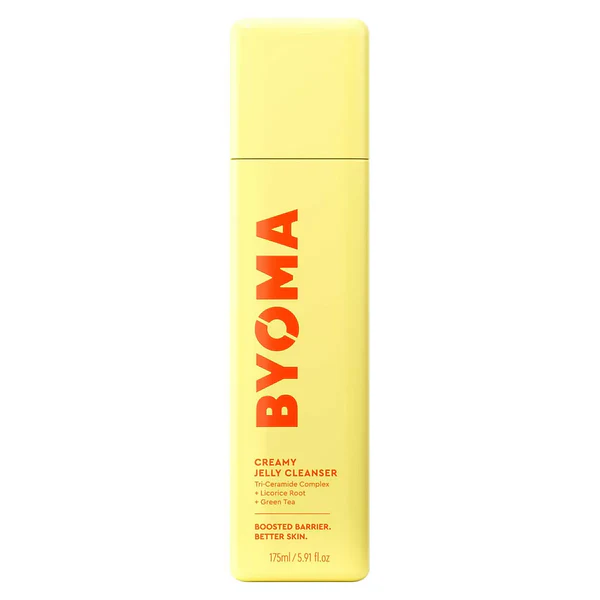
byoma Creamy Jelly Cleanser

    byoma Creamy Jelly Cleanser

    SAFE - Excellent
    (9/10)

    Complete ingredient analysis for byoma Creamy Jelly Cleanser. Get detailed safety ratings, benefits, and concerns for every ingredient.

    byoma
    Ingredient Analysis
    byoma
    creamy jelly cleanser
    ingredient analysis

    Full INCI (as provided by producer)

    Water, Cocamidopropyl Betaine, Disodium Laureth Sulfosuccinate, Sodium Lauryl Sulfoacetate, Sodium Methyl Cocoyl Taurate, Decyl Glucoside, Cocamide Methyl MEA, Stearic Acid, Hydrogenated Lecithin, Sodium Chloride, Propylene Glycol, Glycerin, Ceramide NP, Cholesterol, Phytosphingosine, Caprylic/Capric Triglyceride, Glycyrrhiza Glabra (Licorice) Root Extract, Allantoin, Oleic Acid, Lactic Acid, Camellia Sinensis Leaf Extract, Tocopheryl Acetate, Sodium Benzoate, Potassium Sorbate, Phenoxyethanol

    Overall Analysis

    Overall Safety: SAFE

    The BYOMA Creamy Jelly Cleanser features a balanced formula combining gentle surfactants with a tri-ceramide complex and antioxidant botanicals to cleanse effectively while supporting and protecting the skin barrier. It is free from harsh sulfates, alcohol, and fragrance, making it suitable for sensitive and all skin types. Some surfactants and preservatives have moderate irritation potential but are generally well tolerated in this formulation.

    25
    Ingredients
    8
    Beneficial
    4
    Concerning
    9/10
    Safety Score

    Beneficial Ingredients (8)

    Ceramide NP
    Cholesterol
    Phytosphingosine
    Glycyrrhiza Glabra (Licorice) Root Extract
    Camellia Sinensis Leaf Extract
    Glycerin
    Allantoin
    Tocopheryl Acetate

    Concerning Ingredients (4)

    Cocamidopropyl Betaine
    Cocamide Methyl MEA
    Phenoxyethanol
    Oleic Acid

    Detailed Ingredient Analysis

    Water
    solvent

    Water is the primary solvent in most skincare products, dissolving ingredients that are water-soluble and providing a base for formulation.

    Benefits: dissolves water-soluble ingredients, hydrates skin indirectly
    Cocamidopropyl Betaine
    mild surfactant/cleansing agent

    A mild amphoteric surfactant derived from coconut oil, used to cleanse skin gently while stabilizing foam and reducing irritation from stronger surfactants.

    Benefits: gentle cleansing, foam stabilizer, reduces irritation of harsher surfactants
    Concerns: may cause irritation or allergic reactions in sensitive individuals
    Disodium Laureth Sulfosuccinate
    surfactant/cleansing agent

    A gentle anionic surfactant used for cleansing that is less irritating than traditional sulfates but can still cause sensitivity in some individuals.

    Benefits: effective cleansing, mild on skin compared to sulfates
    Concerns: potential irritation in very sensitive skin
    Sodium Lauryl Sulfoacetate
    surfactant/cleansing agent

    A mild surfactant derived from coconut and palm oils, providing effective cleansing and foam without harsh irritation.

    Benefits: gentle cleansing, good foaming properties
    Sodium Methyl Cocoyl Taurate
    surfactant/cleansing agent

    A gentle surfactant derived from coconut fatty acids, known for its mildness and ability to cleanse without stripping skin.

    Benefits: mild cleansing, good foaming, skin-friendly
    Decyl Glucoside
    non-ionic surfactant/cleansing agent

    A gentle, plant-derived non-ionic surfactant used for mild cleansing, especially suitable for sensitive skin types.

    Benefits: very mild cleansing, biodegradable, suitable for sensitive skin
    Cocamide Methyl MEA
    foam booster and stabilizer

    A foam booster derived from coconut oil that enhances the texture and foaming properties of cleansers but can be mildly irritating for some.

    Benefits: improves foam quality, enhances texture
    Concerns: may cause irritation or allergic reactions in sensitive skin
    Stearic Acid
    surfactant and emulsifier

    A fatty acid used as a surfactant and emulsifier that helps cleanse skin while providing some moisturizing effects.

    Benefits: cleansing, thickening agent, emollient properties
    Hydrogenated Lecithin
    emulsifier and skin conditioning agent

    A phospholipid that acts as an emulsifier and skin conditioner, supporting the skin barrier and enhancing moisture retention.

    Benefits: improves skin barrier, moisturizing, stabilizes formulation
    Sodium Chloride
    viscosity modifier

    Common salt used to adjust viscosity and stabilize the texture of the cleanser.

    Benefits: thickens formulation, stabilizes product
    Concerns: can be drying in high concentrations
    Propylene Glycol
    humectant

    A humectant that helps retain moisture in the skin and improves product texture but may cause irritation in sensitive individuals.

    Benefits: attracts moisture to skin, improves texture
    Concerns: potential irritant for very sensitive skin
    Glycerin
    humectant

    A widely used humectant that attracts water to the skin, enhancing hydration and supporting barrier health.

    Benefits: hydrates skin, improves skin barrier function, non-irritating
    Ceramide NP
    skin barrier lipid, skin conditioning

    A ceramide that mimics natural skin lipids, essential for restoring and maintaining the skin’s protective barrier and hydration.

    Benefits: restores skin barrier, improves hydration, reduces sensitivity
    Cholesterol
    skin barrier lipid, emollient

    A natural lipid found in skin that helps repair and maintain the skin barrier while providing moisturizing benefits.

    Benefits: supports skin barrier repair, moisturizes, improves skin elasticity
    Phytosphingosine
    skin conditioning, anti-inflammatory

    A lipid with anti-inflammatory and antimicrobial properties that supports skin barrier health and helps reduce acne.

    Benefits: anti-acne, anti-inflammatory, supports skin barrier
    Caprylic/Capric Triglyceride
    emollient, skin conditioning

    An emollient derived from coconut oil and glycerin that moisturizes skin and enhances texture without heaviness.

    Benefits: moisturizes, improves skin texture, non-greasy
    Glycyrrhiza Glabra (Licorice) Root Extract
    skin brightening, anti-inflammatory

    Licorice root extract known for its skin brightening and anti-inflammatory properties, helping to reduce discoloration and soothe skin.

    Benefits: reduces hyperpigmentation, calms skin, antioxidant
    Allantoin
    skin conditioning, soothing agent

    A soothing ingredient that helps calm irritated skin, promotes healing, and provides gentle moisturization.

    Benefits: calms irritation, promotes skin healing, moisturizes
    Oleic Acid
    emollient, skin conditioning

    A fatty acid that acts as an emollient to soften and condition skin but may clog pores in acne-prone individuals.

    Benefits: softens skin, improves barrier function
    Concerns: can be comedogenic for acne-prone skin
    Lactic Acid
    pH adjuster, exfoliant (AHA)

    An alpha hydroxy acid used to gently exfoliate and adjust pH, improving skin texture and hydration but can irritate sensitive skin.

    Benefits: gentle exfoliation, improves skin texture, hydrating
    Concerns: may cause irritation or sensitivity in some skin types
    Camellia Sinensis Leaf Extract
    antioxidant, anti-inflammatory

    Green tea extract rich in antioxidants that protect skin from environmental damage and reduce inflammation.

    Benefits: protects against free radicals, calms skin, anti-aging
    Tocopheryl Acetate
    antioxidant, skin conditioning

    A stable form of vitamin E that acts as an antioxidant to protect skin from damage and supports skin repair.

    Benefits: protects skin from oxidative stress, moisturizes, supports skin healing
    Sodium Benzoate
    preservative

    A commonly used preservative that inhibits microbial growth to maintain product safety and longevity.

    Benefits: prevents microbial growth, extends product shelf life
    Concerns: may cause irritation in very sensitive skin
    Potassium Sorbate
    preservative

    A mild preservative effective against molds and yeasts, used to ensure product safety.

    Benefits: prevents mold and yeast growth, safe and effective
    Concerns: possible mild irritation in sensitive skin
    Phenoxyethanol
    preservative

    A widely used preservative that protects products from bacteria and fungi but can be irritating for sensitive individuals.

    Benefits: broad spectrum antimicrobial, stabilizes product
    Concerns: may cause irritation or allergic reactions in sensitive skin

    Want to analyze another product?

    Use our INCI checker to get detailed ingredient analysis for any skincare product.

    Need a complete skincare routine?

    Try the Routine Creator →
    MySkinRoutine Logo

    MySkinRoutine ⎜ Skincare Routine Creator ⎜ INCI Checker

    © 2025 - MySkinRoutine. All Rights Reserved