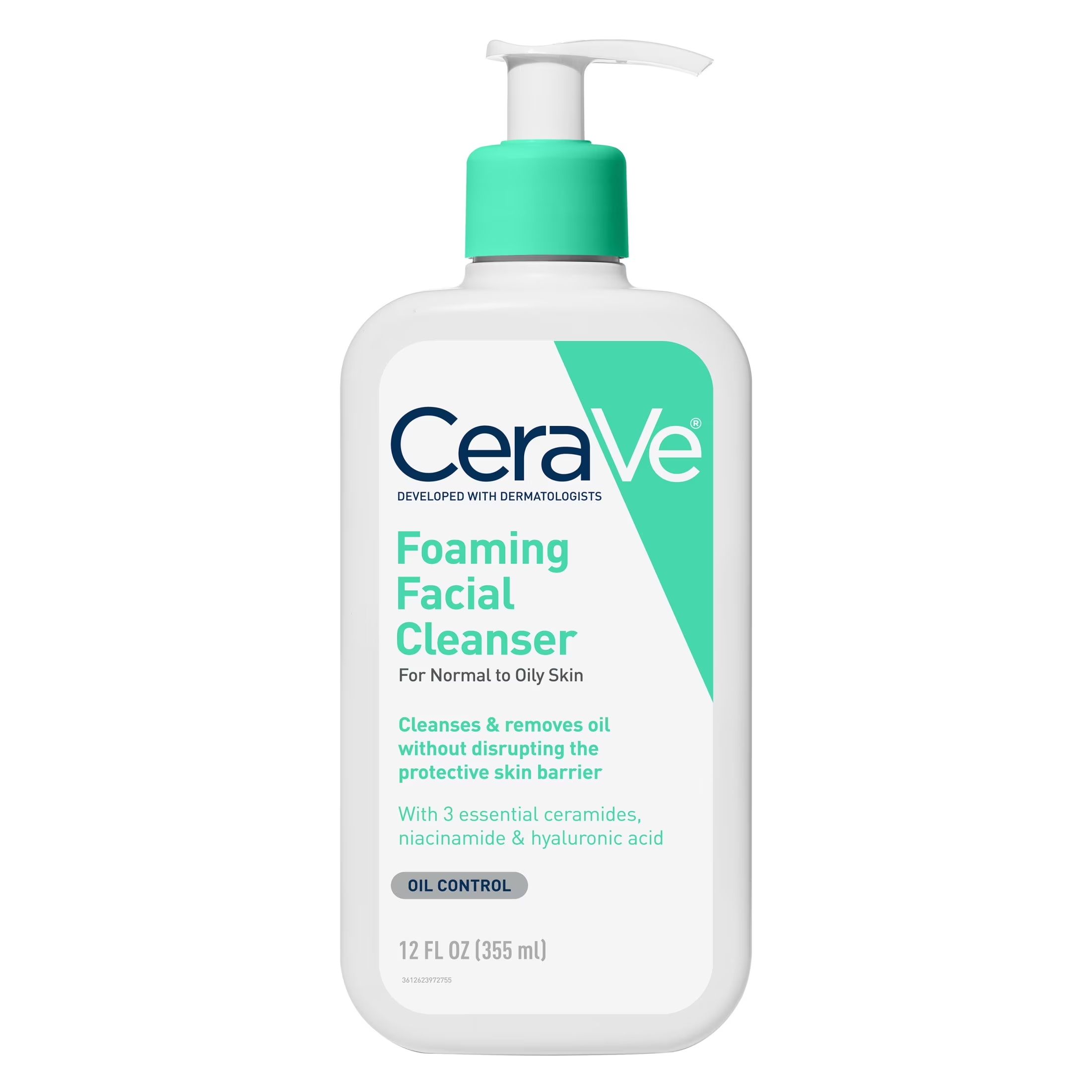
CeraVe  foaming facial cleaner

    CeraVe foaming facial cleaner

    MODERATE - Good
    (6/10)

    Complete ingredient analysis for cerave foaming facial cleaner. Get detailed safety ratings, benefits, and concerns for every ingredient.

    CeraVe
    Ingredient Analysis
    cerave
    foaming facial cleaner
    ingredient analysis

    Full INCI (as provided by producer)

    Aqua / Water / Eau, Cocamidopropyl Hydroxysultaine, Glycerin, Sodium Lauroyl Sarcosinate, PEG-150 Pentaerythrityl Tetrastearate, Niacinamide, PEG-6 Caprylic/Capric Glycerides, Sodium Methyl Cocoyl Taurate, Propylene Glycol, Ceramide NP, Ceramide AP, Ceramide EOP, Carbomer, Methylparaben, Sodium Chloride, Sodium Lauroyl Lactylate, Cholesterol, Disodium EDTA, Propylparaben, Citric Acid, Tetrasodium EDTA, Hydrolyzed Hyaluronic Acid, Phytosphingosine, Xanthan Gum.

    Overall Analysis

    Overall Safety: MODERATE

    CeraVe Foaming Facial Cleanser contains a well-balanced blend of gentle surfactants, skin barrier lipids (ceramides, cholesterol, phytosphingosine), and hydrating agents (glycerin, hyaluronic acid) that support cleansing without over-stripping. However, the presence of parabens (methylparaben, propylparaben) and PEG derivatives introduces moderate safety concerns for sensitive or paraben-averse users. The formula is fragrance-free and dermatologist-developed, suitable for normal to oily skin with a focus on barrier support and hydration.

    24
    Ingredients
    11
    Beneficial
    5
    Concerning
    6/10
    Safety Score

    Beneficial Ingredients (11)

    Ceramide NP
    Ceramide AP
    Ceramide EOP
    Niacinamide
    Glycerin
    Hydrolyzed Hyaluronic Acid
    Phytosphingosine
    Cocamidopropyl Hydroxysultaine
    Sodium Lauroyl Sarcosinate
    Sodium Methyl Cocoyl Taurate
    Cholesterol

    Concerning Ingredients (5)

    Methylparaben
    Propylparaben
    PEG-150 Pentaerythrityl Tetrastearate
    PEG-6 Caprylic/Capric Glycerides
    Propylene Glycol

    Detailed Ingredient Analysis

    Aqua / Water / Eau
    solvent

    Water is the primary solvent in cosmetic formulations, dissolving water-soluble ingredients and providing hydration support.

    Benefits: dissolves other ingredients, hydrates skin indirectly
    Cocamidopropyl Hydroxysultaine
    mild surfactant, foaming agent

    A mild amphoteric surfactant derived from coconut oil, used for gentle cleansing and foam enhancement with good biodegradability.

    Benefits: gentle cleansing, foam booster, biodegradable
    Concerns: potential allergen for sensitive skin
    Glycerin
    humectant, moisturizer

    A natural moisturizing factor that attracts water to the skin, enhancing hydration and maintaining skin barrier integrity.

    Benefits: attracts moisture, improves skin hydration, supports skin barrier
    Sodium Lauroyl Sarcosinate
    surfactant, cleanser

    A gentle anionic surfactant known for effective cleansing and foaming with low irritation potential.

    Benefits: mild cleansing, foam booster, compatible with sensitive skin
    PEG-150 Pentaerythrityl Tetrastearate
    emulsifier, thickener

    A polyethylene glycol derivative used to thicken and emulsify formulations, enhancing product stability and feel.

    Benefits: stabilizes formula, improves texture
    Concerns: PEG compounds may have impurities, potential for irritation in sensitive skin
    Niacinamide
    anti-inflammatory, skin barrier support

    A form of vitamin B3 that calms inflammation, strengthens the skin barrier, and helps regulate oil production.

    Benefits: reduces redness, improves skin barrier, regulates sebum
    PEG-6 Caprylic/Capric Glycerides
    emulsifier, solubilizer

    A PEG-modified glyceride used to solubilize oils and improve the texture and stability of formulations.

    Benefits: helps dissolve oils, improves texture
    Concerns: PEG derivatives may contain impurities, possible irritation in sensitive skin
    Sodium Methyl Cocoyl Taurate
    surfactant, cleanser

    A mild surfactant derived from coconut fatty acids, providing gentle cleansing and rich foam.

    Benefits: mild cleansing, good foam, skin-friendly
    Propylene Glycol
    humectant, solvent

    A common humectant that helps retain moisture and enhances penetration of other ingredients, but may irritate sensitive skin.

    Benefits: attracts moisture, improves ingredient penetration
    Concerns: can cause irritation or sensitization in some individuals
    Ceramide NP
    skin barrier lipid

    A skin-identical ceramide that replenishes the lipid barrier, supporting skin hydration and protection.

    Benefits: restores skin barrier, improves hydration, reduces dryness
    Ceramide AP
    skin barrier lipid

    A ceramide that mimics natural skin lipids to reinforce the barrier and maintain moisture balance.

    Benefits: strengthens barrier, improves skin resilience, moisturizes
    Ceramide EOP
    skin barrier lipid

    A key ceramide component that helps maintain skin barrier integrity and hydration.

    Benefits: enhances barrier function, supports hydration, protects skin
    Carbomer
    thickener, stabilizer

    A synthetic polymer used to thicken and stabilize cosmetic formulations.

    Benefits: controls viscosity, stabilizes formula
    Methylparaben
    preservative

    A paraben preservative effective against bacteria and fungi but may cause sensitivity in some users.

    Benefits: prevents microbial growth, extends shelf life
    Concerns: potential allergen, controversial due to parabens debate
    Sodium Chloride
    thickener, viscosity modifier

    Common salt used to adjust viscosity and stabilize cosmetic products.

    Benefits: adjusts texture, stabilizes formula
    Concerns: can be drying in high concentrations
    Sodium Lauroyl Lactylate
    surfactant, emulsifier

    A mild surfactant and emulsifier that helps cleanse skin gently while improving texture.

    Benefits: mild cleansing, emulsifies oils, improves skin feel
    Cholesterol
    skin barrier lipid

    A natural lipid found in skin that helps maintain barrier function and moisture retention.

    Benefits: restores barrier, improves hydration, supports skin repair
    Disodium EDTA
    chelating agent

    A chelating agent that stabilizes formulations by binding metal ions that could degrade the product.

    Benefits: binds metal ions, improves formula stability
    Propylparaben
    preservative

    A paraben preservative similar to methylparaben, effective but may cause sensitivity in some individuals.

    Benefits: prevents microbial contamination, extends shelf life
    Concerns: potential allergen, paraben controversy
    Citric Acid
    pH adjuster, antioxidant

    An alpha hydroxy acid used to adjust pH and provide mild exfoliation and antioxidant benefits.

    Benefits: balances pH, provides mild exfoliation, antioxidant properties
    Concerns: can irritate very sensitive skin
    Tetrasodium EDTA
    chelating agent

    A chelating agent that enhances product stability by binding trace metals.

    Benefits: improves stability, binds metal ions
    Hydrolyzed Hyaluronic Acid
    humectant, skin conditioner

    A low molecular weight form of hyaluronic acid that penetrates skin to provide hydration and improve texture.

    Benefits: deep hydration, improves skin texture, supports barrier function
    Phytosphingosine
    skin barrier lipid, anti-inflammatory

    A lipid naturally found in skin that helps restore barrier function and reduce inflammation.

    Benefits: supports barrier repair, anti-inflammatory, antimicrobial
    Xanthan Gum
    thickener, stabilizer

    A natural polysaccharide used to thicken and stabilize cosmetic products.

    Benefits: improves texture, stabilizes formula

    Want to analyze another product?

    Use our INCI checker to get detailed ingredient analysis for any skincare product.

    Need a complete skincare routine?

    Try the Routine Creator →
    MySkinRoutine Logo

    MySkinRoutine ⎜ Skincare Routine Creator ⎜ INCI Checker

    © 2025 - MySkinRoutine. All Rights Reserved