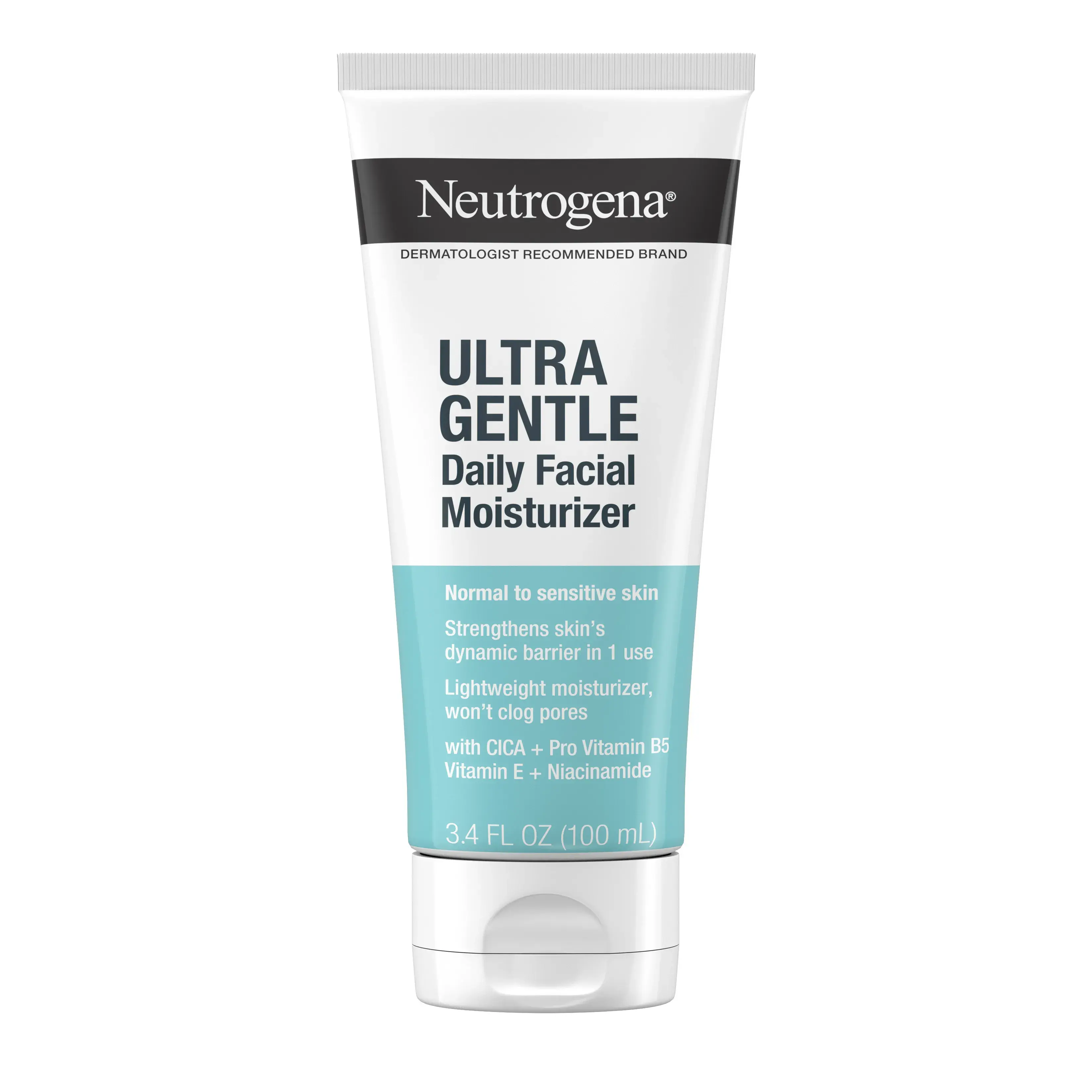
Neutrogena Gentle Moisturizer

    Neutrogena Gentle Moisturizer

    SAFE - Excellent
    (9/10)

    Complete ingredient analysis for Neutrogena gentle moisturizer. Get detailed safety ratings, benefits, and concerns for every ingredient.

    Neutrogena
    Ingredient Analysis
    neutrogena
    gentle moisturizer
    ingredient analysis

    Full INCI (as provided by producer)

    Water, Glycerin, Dicaprylyl Ether, Caprylic/Capric Triglyceride, Niacinamide, Cetyl Alcohol, Centella Asiatica Extract, Panthenol, Tocopheryl Acetate, Stearic Acid, Palmitic Acid, Butylene Glycol, Caprylyl Glycol, Cetearyl Alcohol, Dimethicone, Ceteareth-20, Carbomer, Phenoxyethanol, Chlorphenesin, Sodium Hydroxide, Sodium Citrate, Citric Acid

    Overall Analysis

    Overall Safety: SAFE

    The Neutrogena Ultra Gentle Daily Facial Moisturizer formula is composed primarily of well-tolerated, skin-friendly ingredients including humectants, emollients, antioxidants, and soothing botanicals. It contains mild preservatives and emulsifiers with low irritation potential, making it suitable for sensitive skin. The presence of niacinamide and Centella Asiatica extract adds anti-inflammatory and barrier-supportive benefits.

    22
    Ingredients
    7
    Beneficial
    4
    Concerning
    9/10
    Safety Score

    Beneficial Ingredients (7)

    Water
    Glycerin
    Niacinamide
    Centella Asiatica Extract
    Panthenol
    Tocopheryl Acetate
    Dimethicone

    Concerning Ingredients (4)

    Ceteareth-20
    Phenoxyethanol
    Chlorphenesin
    Sodium Hydroxide

    Detailed Ingredient Analysis

    Water
    solvent

    Water is the primary solvent in cosmetics, used to dissolve water-soluble ingredients and hydrate the skin. It is purified and deionized to ensure product stability.

    Benefits: hydrates skin, dissolves other ingredients, stabilizes formula
    Glycerin
    humectant, moisturizer

    Glycerin is a natural humectant that draws water into the skin, enhancing hydration and maintaining skin barrier integrity.

    Benefits: attracts moisture to skin, improves skin barrier, soothes dryness
    Dicaprylyl Ether
    emollient

    Dicaprylyl Ether is a lightweight emollient that helps soften and smooth the skin without a greasy residue.

    Benefits: provides lightweight skin conditioning, improves spreadability, non-greasy feel
    Caprylic/Capric Triglyceride
    emollient, skin-replenishing agent

    Derived from coconut oil and glycerin, this ingredient acts as an emollient and skin-replenishing agent, providing a silky, non-greasy feel.

    Benefits: moisturizes skin, restores skin barrier, improves texture
    Niacinamide
    skin-conditioning agent, antioxidant

    Niacinamide (Vitamin B3) is a multifunctional ingredient known for its anti-inflammatory properties, improving skin barrier function and reducing hyperpigmentation.

    Benefits: reduces redness, improves skin barrier, evens skin tone
    Cetyl Alcohol
    emollient, thickener, emulsifier

    Cetyl Alcohol is a fatty alcohol used as an emollient and thickener that helps stabilize formulations and soften skin.

    Benefits: softens skin, stabilizes emulsions, improves texture
    Centella Asiatica Extract
    antioxidant, skin-soothing agent

    Centella Asiatica Extract is a botanical ingredient known for its soothing, healing, and antioxidant properties, beneficial for sensitive skin.

    Benefits: calms irritation, promotes collagen synthesis, antioxidant protection
    Panthenol
    moisturizer, skin-conditioning agent

    Panthenol (Pro-vitamin B5) is a moisturizing agent that enhances skin hydration, elasticity, and has anti-inflammatory effects.

    Benefits: hydrates skin, improves elasticity, soothes irritation
    Tocopheryl Acetate
    antioxidant, skin-conditioning agent

    Tocopheryl Acetate is a stable form of Vitamin E that acts as an antioxidant, protecting skin from environmental damage and supporting repair.

    Benefits: protects against free radicals, moisturizes skin, supports skin repair
    Concerns: may cause irritation in very sensitive skin
    Stearic Acid
    emulsifier, thickener

    Stearic Acid is a fatty acid used to thicken and stabilize emulsions while providing emollient properties.

    Benefits: stabilizes formulation, provides texture, moisturizes skin
    Palmitic Acid
    emollient, surfactant

    Palmitic Acid is a saturated fatty acid that acts as an emollient and surfactant, improving skin softness and formulation stability.

    Benefits: softens skin, helps stabilize formula, improves texture
    Butylene Glycol
    solvent, humectant

    Butylene Glycol is a solvent and humectant that helps retain moisture and improve the delivery of other ingredients into the skin.

    Benefits: improves skin hydration, enhances ingredient penetration, stabilizes formula
    Caprylyl Glycol
    skin-conditioning agent, preservative booster

    Caprylyl Glycol is a humectant and skin-conditioning agent that also boosts preservative performance.

    Benefits: moisturizes skin, enhances antimicrobial efficacy, improves texture
    Cetearyl Alcohol
    emulsifier, emollient, thickener

    Cetearyl Alcohol is a fatty alcohol used to thicken and stabilize formulations while providing emollient benefits.

    Benefits: softens skin, stabilizes emulsions, improves texture
    Dimethicone
    emollient, skin protectant

    Dimethicone is a silicone-based polymer that creates a breathable barrier on the skin, enhancing smoothness and preventing water loss.

    Benefits: forms protective barrier, smooths skin texture, prevents moisture loss
    Ceteareth-20
    emulsifier, surfactant

    Ceteareth-20 is a polyethylene glycol ether used as an emulsifier; concerns exist about possible impurities and mild irritation in sensitive skin.

    Benefits: stabilizes emulsions, improves texture
    Concerns: potential contamination with ethylene oxide and 1,4-dioxane, may irritate very sensitive skin
    Carbomer
    thickener, stabilizer

    Carbomer is a synthetic polymer used to thicken and stabilize cosmetic formulations.

    Benefits: controls viscosity, stabilizes formula
    Phenoxyethanol
    preservative

    Phenoxyethanol is a widely used preservative effective against bacteria and fungi but can cause irritation in some sensitive individuals.

    Benefits: prevents microbial growth, extends shelf life
    Concerns: may cause irritation or allergic reactions in sensitive skin
    Chlorphenesin
    preservative

    Chlorphenesin is a preservative used to inhibit microbial growth but may cause irritation or sensitization in sensitive skin.

    Benefits: prevents microbial contamination
    Concerns: potential irritant, may cause allergic reactions
    Sodium Hydroxide
    pH adjuster

    Sodium Hydroxide is used in small amounts to adjust the pH of formulations; it can be irritating if not properly neutralized.

    Benefits: adjusts formula pH for stability
    Concerns: can be irritating at high concentrations
    Sodium Citrate
    buffering agent, pH adjuster

    Sodium Citrate is a buffering agent that helps maintain the pH balance of cosmetic products.

    Benefits: stabilizes pH, improves formula stability
    Citric Acid
    pH adjuster, antioxidant

    Citric Acid is an alpha hydroxy acid used to adjust pH and provide mild exfoliation and antioxidant benefits.

    Benefits: adjusts pH, provides mild exfoliation, antioxidant properties
    Concerns: may cause irritation in sensitive skin

    Want to analyze another product?

    Use our INCI checker to get detailed ingredient analysis for any skincare product.

    Need a complete skincare routine?

    Try the Routine Creator →
    MySkinRoutine Logo

    MySkinRoutine ⎜ Skincare Routine Creator ⎜ INCI Checker

    © 2025 - MySkinRoutine. All Rights Reserved