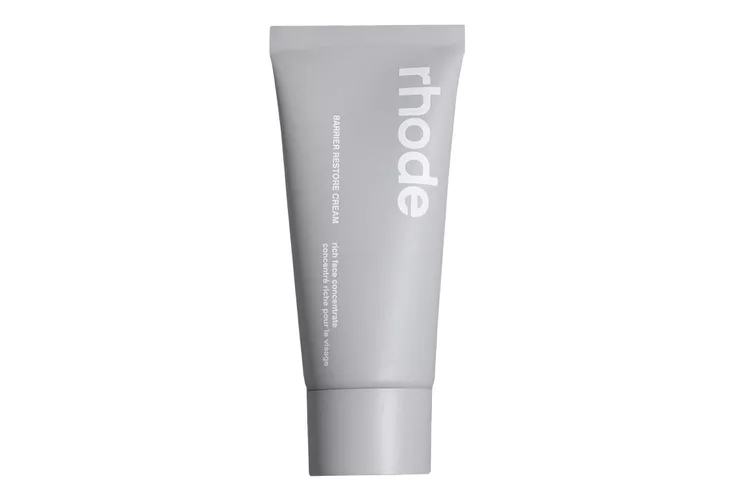
Rhode Beauty Barrier Restore Cream

    Rhode Beauty Barrier Restore Cream

    SAFE - Excellent
    (9/10)

    Complete ingredient analysis for Rhode Beauty Barrier Restore Cream. Get detailed safety ratings, benefits, and concerns for every ingredient.

    Rhode
    Ingredient Analysis
    rhode
    beauty barrier restore cream
    ingredient analysis

    Full INCI (as provided by producer)

    Aqua (Water), Glycerin, Butyrospermum Parkii (Shea) Butter, Niacinamide, Squalane, Sodium Hyaluronate, Acetyl Tetrapeptide-2, Palmitoyl Heptapeptide-27, Bisabolol, Cetearyl Alcohol, Cetearyl Olivate, Sorbitan Olivate, Caprylic/Capric Triglyceride, Cetyl Palmitate, Glyceryl Stearate, PEG-100 Stearate, Dimethicone, Tocopherol, Carbomer, Xanthan Gum, Ethylhexylglycerin, Phenoxyethanol, Sodium Hydroxide

    Overall Analysis

    Overall Safety: SAFE

    Rhode Beauty Barrier Restore Cream features a well-balanced formula focusing on hydration, skin barrier support, and soothing benefits. It contains multiple safe and effective moisturizing agents, peptides for skin conditioning, and antioxidants, with no harsh irritants or fragrances. The inclusion of mild preservatives and emulsifiers is standard and generally well-tolerated, making this product suitable for sensitive and dry skin types.

    23
    Ingredients
    9
    Beneficial
    3
    Concerning
    9/10
    Safety Score

    Beneficial Ingredients (9)

    Glycerin
    Niacinamide
    Squalane
    Sodium Hyaluronate
    Acetyl Tetrapeptide-2
    Palmitoyl Heptapeptide-27
    Bisabolol
    Tocopherol
    Butyrospermum Parkii (Shea) Butter

    Concerning Ingredients (3)

    PEG-100 Stearate
    Phenoxyethanol
    Sodium Hydroxide

    Detailed Ingredient Analysis

    Aqua (Water)
    solvent

    Purified water serves as the base solvent in the formula, enabling dissolution of hydrophilic ingredients and providing hydration support.

    Benefits: dissolves water-soluble ingredients, hydrates skin indirectly
    Glycerin
    humectant

    A widely used humectant that draws water into the skin, enhancing moisture retention and skin softness.

    Benefits: attracts moisture to skin, improves skin hydration, supports skin barrier function
    Butyrospermum Parkii (Shea) Butter
    emollient

    A natural fat extracted from shea nuts, it acts as an emollient to soften and protect the skin, while also offering mild antioxidant benefits.

    Benefits: moisturizes and softens skin, supports skin barrier, provides antioxidant properties
    Concerns: may be comedogenic for very acne-prone skin
    Niacinamide
    skin conditioning agent

    A form of vitamin B3 that enhances skin barrier function, reduces irritation, and evens out pigmentation.

    Benefits: improves skin texture, reduces redness and inflammation, brightens skin tone
    Squalane
    moisturizing agent

    A stable, saturated hydrocarbon that mimics skin’s natural oils, providing hydration without clogging pores.

    Benefits: lightweight hydration, non-greasy emollient, supports skin barrier
    Sodium Hyaluronate
    hydrating agent

    The salt form of hyaluronic acid, it deeply hydrates by holding water in the skin, improving texture and suppleness.

    Benefits: retains skin moisture, plumps skin, improves skin elasticity
    Acetyl Tetrapeptide-2
    conditioning peptide

    A peptide that promotes skin regeneration and helps maintain skin elasticity and firmness.

    Benefits: supports skin repair, improves skin firmness, stimulates collagen synthesis
    Palmitoyl Heptapeptide-27
    skin conditioning peptide

    A peptide complex that supports collagen synthesis, enhancing skin smoothness and reducing wrinkles.

    Benefits: stimulates collagen production, improves skin texture, reduces signs of aging
    Bisabolol
    skin soothing agent

    A natural compound derived from chamomile that soothes and reduces skin redness and irritation.

    Benefits: calms irritation, anti-inflammatory, antioxidant
    Cetearyl Alcohol
    emulsifier and emollient

    A fatty alcohol used to thicken and stabilize creams while providing moisturizing properties.

    Benefits: stabilizes formula, softens skin, improves texture
    Cetearyl Olivate
    emulsifier

    An emulsifier derived from olive oil that helps create a smooth, stable cream texture.

    Benefits: helps blend oil and water, improves skin feel, mild and non-irritating
    Sorbitan Olivate
    emulsifier

    An olive oil-derived emulsifier that supports moisture retention and gentle skin compatibility.

    Benefits: stabilizes emulsions, enhances skin hydration, non-irritating
    Caprylic/Capric Triglyceride
    emollient

    A lightweight emollient derived from coconut oil and glycerin that softens skin and enhances product texture.

    Benefits: moisturizes skin, improves spreadability, non-greasy
    Cetyl Palmitate
    emollient and thickener

    A waxy emollient that enhances cream consistency and provides skin conditioning.

    Benefits: improves texture, softens skin, stabilizes formula
    Glyceryl Stearate
    emulsifier and emollient

    An emulsifier that also acts as a skin conditioner, improving cream stability and hydration.

    Benefits: stabilizes emulsions, moisturizes skin, improves texture
    PEG-100 Stearate
    emulsifier

    A polyethylene glycol-based emulsifier that stabilizes formulations but may cause irritation in sensitive individuals.

    Benefits: helps blend oil and water phases, improves texture
    Concerns: potential for irritation in sensitive skin, PEG compounds may have impurities
    Dimethicone
    silicone-based emollient

    A silicone that provides a silky feel, protects skin, and enhances spreadability without clogging pores.

    Benefits: forms protective barrier, smooths skin texture, non-comedogenic
    Tocopherol
    antioxidant

    Vitamin E derivative that acts as an antioxidant, protecting skin cells from oxidative damage.

    Benefits: protects skin from free radicals, supports skin repair, moisturizes
    Carbomer
    thickener and stabilizer

    A synthetic polymer used to thicken and stabilize cosmetic formulations.

    Benefits: improves product texture, stabilizes emulsions
    Xanthan Gum
    thickener and stabilizer

    A natural polysaccharide used to thicken and stabilize cosmetic products.

    Benefits: improves texture, stabilizes formula
    Ethylhexylglycerin
    preservative enhancer and skin conditioning agent

    A mild preservative booster and skin conditioner that enhances product safety and skin feel.

    Benefits: boosts preservative efficacy, mild skin conditioning, antimicrobial
    Phenoxyethanol
    preservative

    A common preservative used to inhibit microbial contamination, generally safe but can irritate sensitive skin.

    Benefits: prevents microbial growth, extends product shelf life
    Concerns: may cause irritation in sensitive skin, restricted concentration limits
    Sodium Hydroxide
    pH adjuster

    An alkaline agent used in small amounts to adjust the pH of the formulation to optimal levels.

    Benefits: adjusts product pH for stability and skin compatibility
    Concerns: can be irritating at high concentrations

    Want to analyze another product?

    Use our INCI checker to get detailed ingredient analysis for any skincare product.

    Need a complete skincare routine?

    Try the Routine Creator →
    MySkinRoutine Logo

    MySkinRoutine ⎜ Skincare Routine Creator ⎜ INCI Checker

    © 2025 - MySkinRoutine. All Rights Reserved